- 01
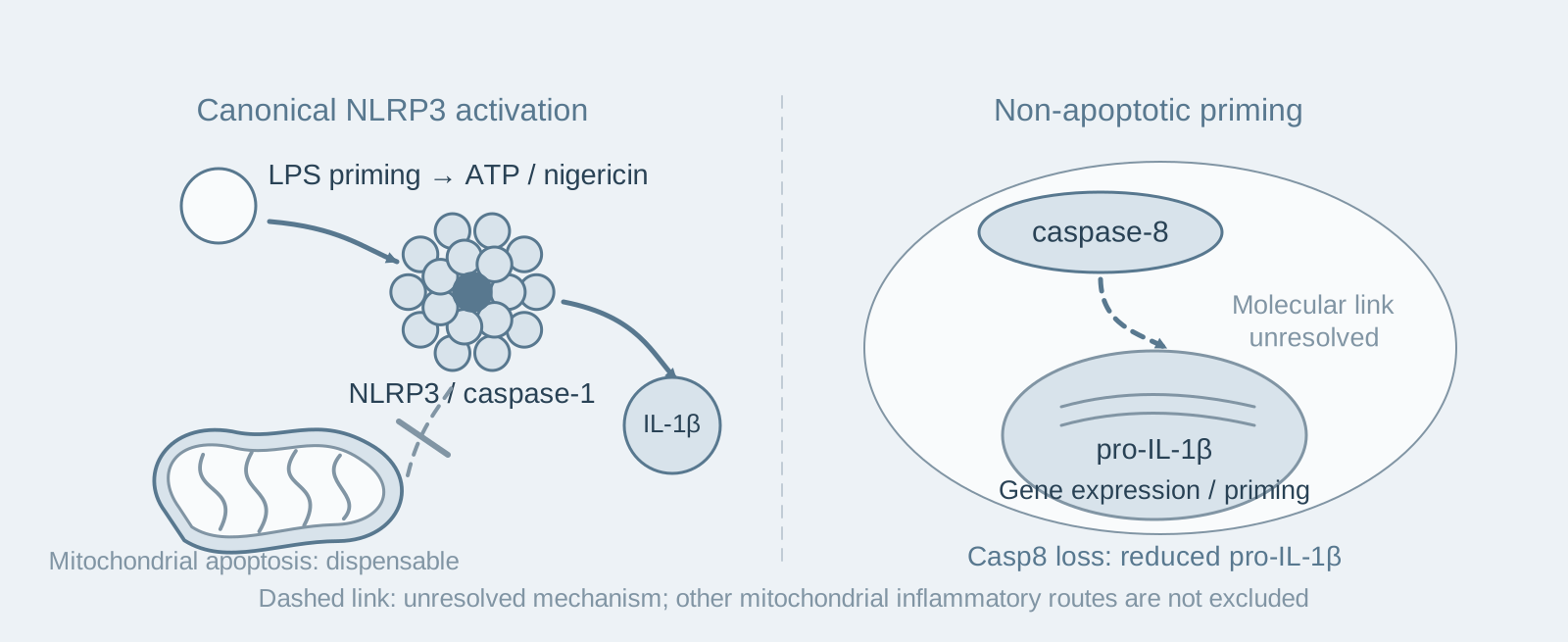
Main finding: Mitochondrial apoptosis, mitochondrial permeability transition, mitophagy and MAVS are all dispensable for canonical NLRP3 activation;
- 02
Key mechanism: The inhibition of NLRP3 by cyclosporin A is an off-target effect; caspase-8 participates in inflammasome priming through a non-apoptotic function;
- 03
Significance: Hypotheses proposing a "unified upstream mechanism" must be tested genetically, and the study reveals that caspase-8 is more than a cell-death molecule.
On this page
I. What question does this paper answer?
NLRP3 can be activated by unrelated stimuli such as toxins, ATP, urate crystals and alum adjuvant, and the field has long sought the common downstream point at which they converge. Around 2012, the most popular answer was mitochondria: all stimuli first induce mitochondrial apoptosis, releasing oxidized mtDNA to activate NLRP3. However, this model relied mainly on inhibitors and observations of correlation, without the crucial gene-knockout tests. This study supplies those missing experiments and also asks: if the model does not hold, what is the actual key factor?
II. Following the logic of the evidence
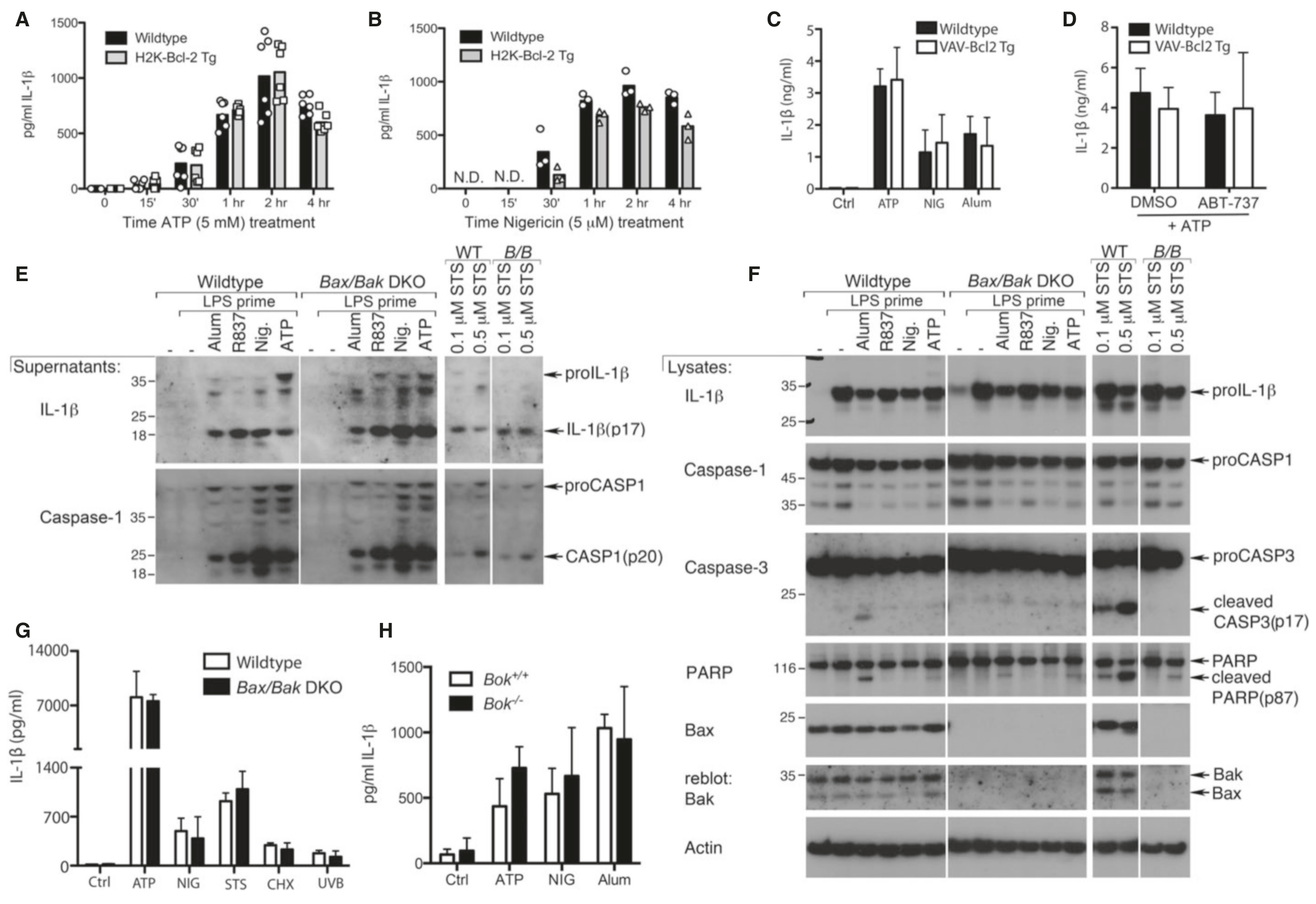
Step 1: Test mitochondrial apoptosis (Figure 1). The authors tested it from four directions: when they activated NLRP3 in macrophages from two independent transgenic strains overexpressing BCL-2, IL-1β secretion was unaffected; conversely, promoting apoptosis with ABT-737 also had no effect. In Bak/Bax double-knockout macrophages—with the mitochondrial apoptosis effectors completely absent—the authors used ATP, nigericin, alum adjuvant and even apoptosis-inducing agents, and found that IL-1β secretion remained normal in every case; deleting the functionally redundant BOK likewise had no effect. Together, these results show that mitochondrial apoptosis is not required for canonical NLRP3 activation.
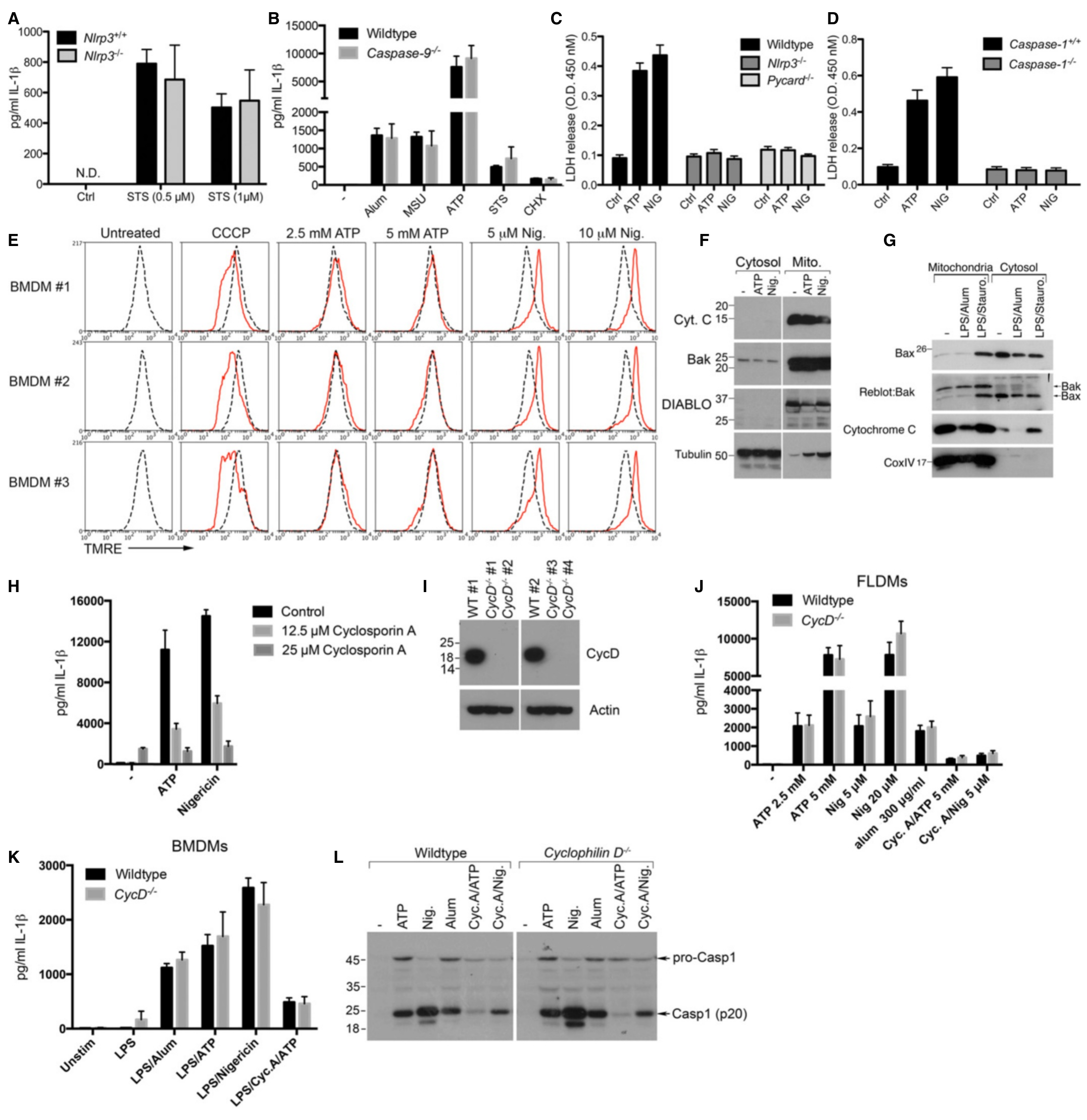
Step 2: Test mitochondrial permeability transition and reassess the drug evidence (Figure 2). The authors examined cells within the time window of effective NLRP3 activation and found that they died by pyroptosis rather than apoptosis, without cytochrome c release or BAX translocation. Inhibition of NLRP3 by cyclosporin A (CsA) had been taken as evidence for "MPT pore involvement". The authors found completely normal NLRP3 activation in cells lacking CycD, a known CsA target, and CsA still inhibited NLRP3 in those knockout cells. Together, these results show that "the inhibitor works" does not mean "its known target is involved"—CsA inhibition of NLRP3 is an off-target effect.
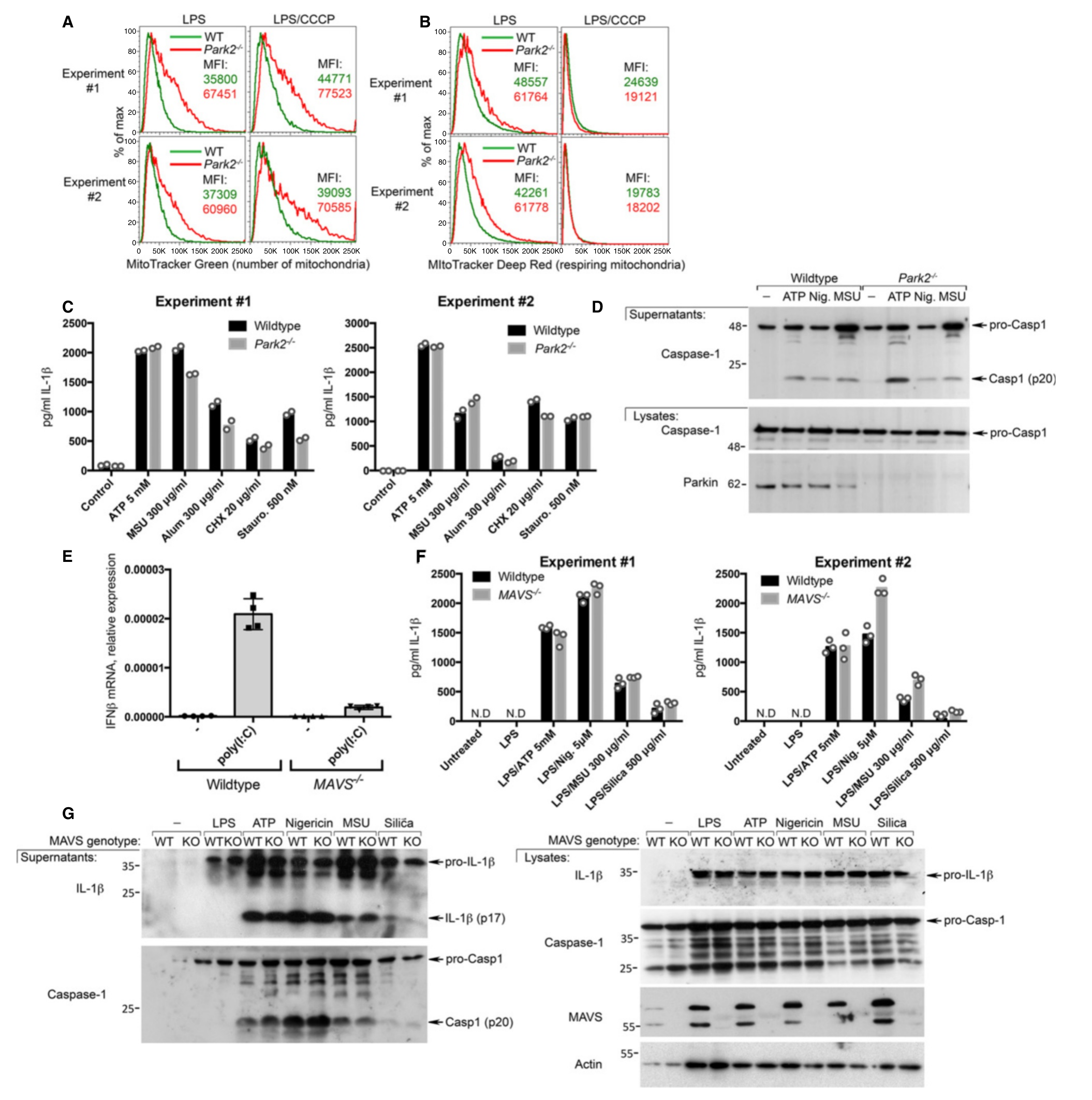
Step 3: Test mitophagy and MAVS (Figure 3). The authors confirmed mitochondrial accumulation in Parkin-knockout macrophages (the genotype did produce its known phenotype) and defective IFN-β induction in MAVS-knockout cells. They then examined NLRP3 activation in both and found it to be completely normal. These controls showing that "the processes expected to be defective really are defective" are essential to the credibility of negative results.
Step 4: Discover a new function of caspase-8 (Figure 4). The authors generated caspase-8-knockout mice on a Ripk3−/− background (deleting caspase-8 alone is lethal because of necroptosis). After stimulating double-knockout cells with TLR ligands such as LPS, they found markedly reduced pro-IL-1β and TNF production, despite normal NF-κB activation; after an in vivo LPS challenge, serum IL-1β, TNF and IL-6 were all lower in the double-knockout mice than in controls. The cells had not died; gene expression was affected. Together, these results show that caspase-8 has a function that does not promote cell death: participating in inflammasome priming.
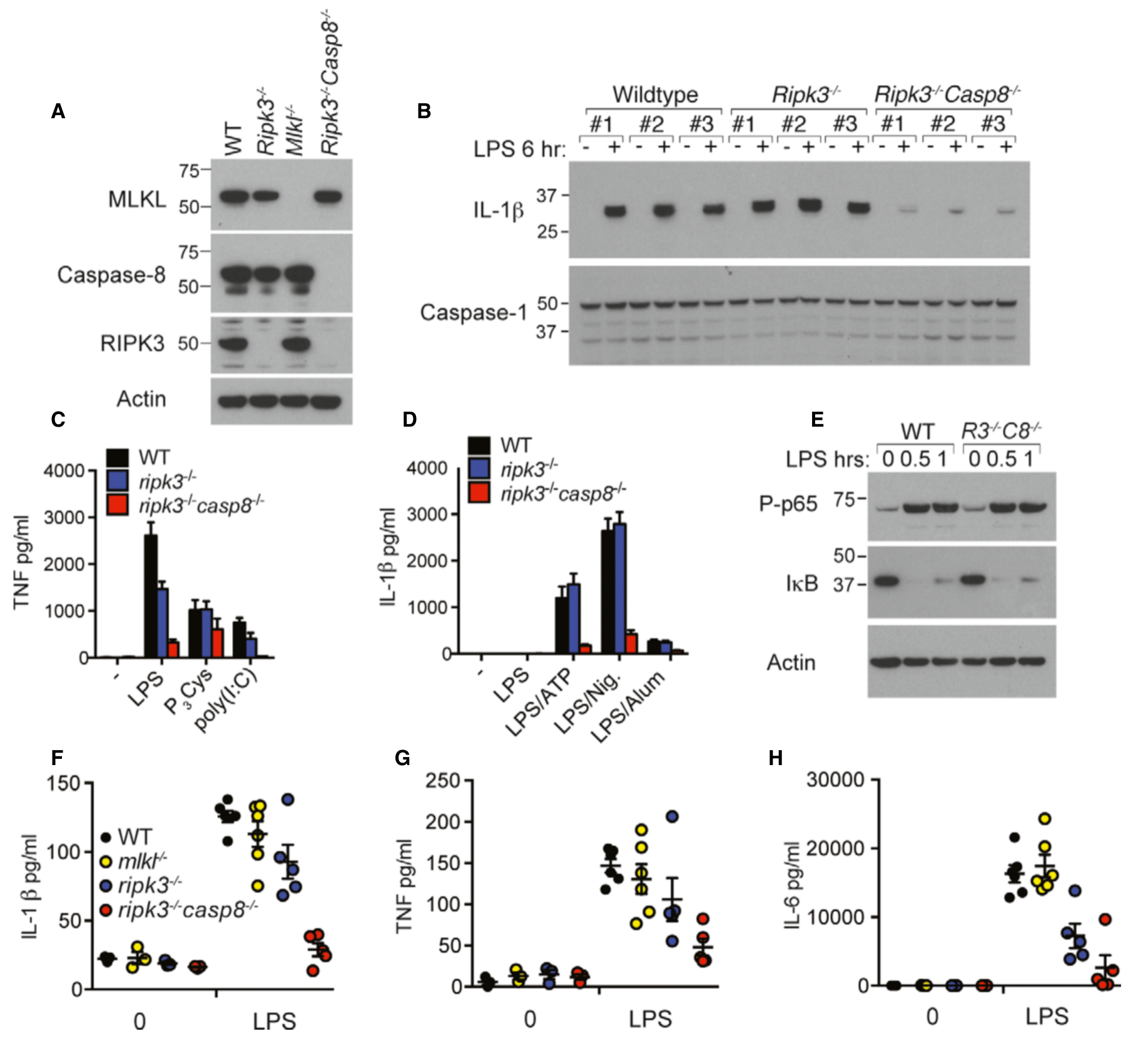
Conclusion: Mitochondrial apoptosis is not a unified upstream mechanism for NLRP3 activation; caspase-8 performs a non-apoptotic function at the earlier priming step.
III. Implications for experiments
- Negative conclusions need a complete chain of positive controls: For every knockout, first verify that "the genotype does produce its known phenotype", then report that "NLRP3 is unaffected"—reviewers will check this point.
- Check drug conclusions genetically: The drug works, deleting its target leaves the phenotype normal, and the drug still works after target deletion; having all three establishes an off-target effect. This three-part reasoning applies to the mechanism of any inhibitor.
- What happens first is closer to causation than what is seen at the end: Mitochondrial events do occur, but downstream rather than upstream of NLRP3 activation—judging causation requires examining the time window.
IV. Connections to other papers on this site
- Comparison | BAX/BAK mitochondrial apoptosis activates IL-1β (Vince 2018, Cell Rep): The findings appear contradictory—this paper says mitochondrial apoptosis is dispensable for NLRP3, whereas Vince reports that BAX/BAK apoptosis can drive IL-1β. The context differs: this paper tests canonical NLRP3 stimuli, whereas Vince uses an apoptosis system with simultaneous BCL-XL/MCL-1 inhibition. "Whether it is required" must always be stated together with the cellular context.
- Extension | RIPK3 activates NLRP3 without MLKL (Lawlor 2015, Nat Commun): This paper finds that caspase-8 participates in inflammasome priming; Lawlor further demonstrates that caspase-8 also directly participates in NLRP3 activation—caspase-8 has multiple pro-inflammatory functions beyond apoptosis.
- Extension | RIPK3 cleavage limits NLRP3 (Tran 2024, Cell Death Differ): The same research group and methodological lineage. This paper finds that caspase-8 promotes priming, whereas Tran finds that it cleaves RIPK3 to limit NLRP3 activation—caspase-8 regulates inflammation in both directions.
- Extension | TLR-induced death in IFN-γ-primed macrophages (Simpson 2022, Immunity): This paper finds that caspase-8 participates in gene-expression regulation during inflammasome priming; Simpson further demonstrates that caspase-8 lowers BCL-2 at the transcriptional level to drive apoptosis—its role in regulating gene expression extends from priming to cell-death execution.
(The comparisons across papers above are a synthesis, rather than a direct conclusion of any one original paper.)
What remains unresolved
Limitations (two points): ① The mtDNA question is not fully closed—the authors only rule out "mitochondrial apoptosis as an obligatory upstream step"; they do not exclude inflammation promoted by released mtDNA through pathways such as AIM2. ② The molecular mechanism by which caspase-8 promotes priming remains unclear: NF-κB is normal while pro-IL-1β decreases, but this paper does not identify the intervening steps or substrates.
Mitochondrial apoptosis is dispensable for NLRP3 inflammasome activation but non-apoptotic caspase-8 is required for inflammasome priming
Ramanjaneyulu Allam; Kate E Lawlor; Eric Chi-Wang Yu; Alison L Mildenhall; Donia M Moujalled; Rowena S Lewis; Francine Ke; Kylie D Mason; Michael J White; Katryn J Stacey; Andreas Strasser; Lorraine A O’Reilly; Warren Alexander; Benjamin T Kile; David L Vaux; James E Vince EMBO Reports. 2014;15:982–990.
Figures are from the verified original paper stored in the library. Original labels, axes and controls are retained; figure numbers and sources are registered in the library.
References
- Allam R, Lawlor KE, Yu ECW, et al. Mitochondrial apoptosis is dispensable for NLRP3 inflammasome activation but non-apoptotic caspase-8 is required for inflammasome priming. EMBO Rep. 2014;15(9):982-990. doi:10.15252/embr.201438463
- Shimada K, Crother TR, Karlin J, et al. Oxidized mitochondrial DNA activates the NLRP3 inflammasome during apoptosis. Immunity. 2012;36(3):401-414.
- Subramanian N, Natarajan K, Clatworthy MR, Wang Z, Germain RN. The adaptor MAVS promotes NLRP3 mitochondrial localization and inflammasome activation. Cell. 2013;153(2):348-361.
- Sagulenko V, Thygesen SJ, Sester DP, et al. AIM2 and NLRP3 inflammasomes activate both apoptotic and pyroptotic death pathways via ASC. Cell Death Differ. 2013;20(9):1149-1160.
Paper discussion
No sign-up. Nickname optional.