- 01
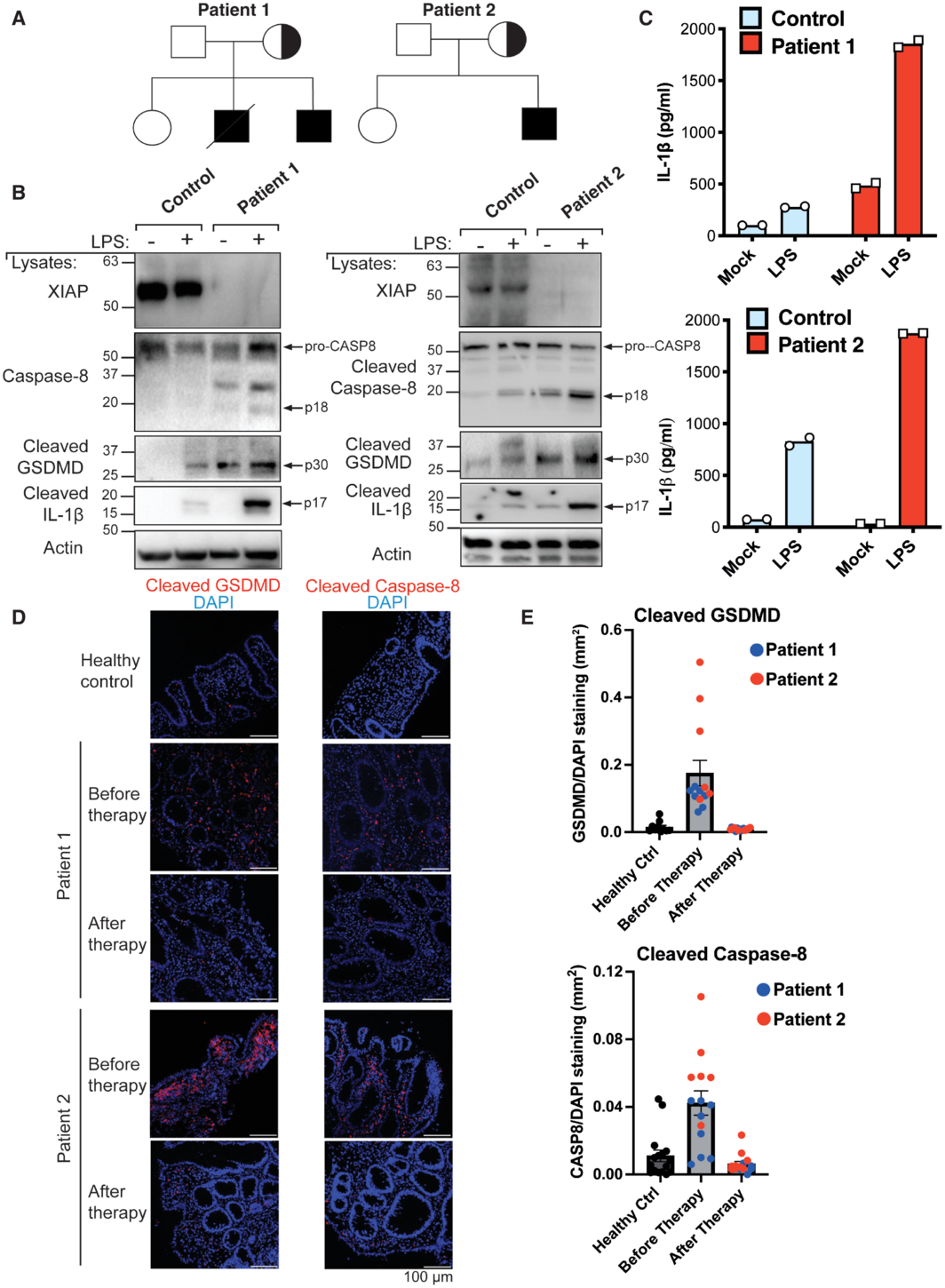
Main finding: Caspase-8 and GSDMD activation and IL-1β maturation were elevated in PBMCs and diseased intestinal mucosa from two patients with XIAP-deficient IBD, and decreased after treatment;
- 02
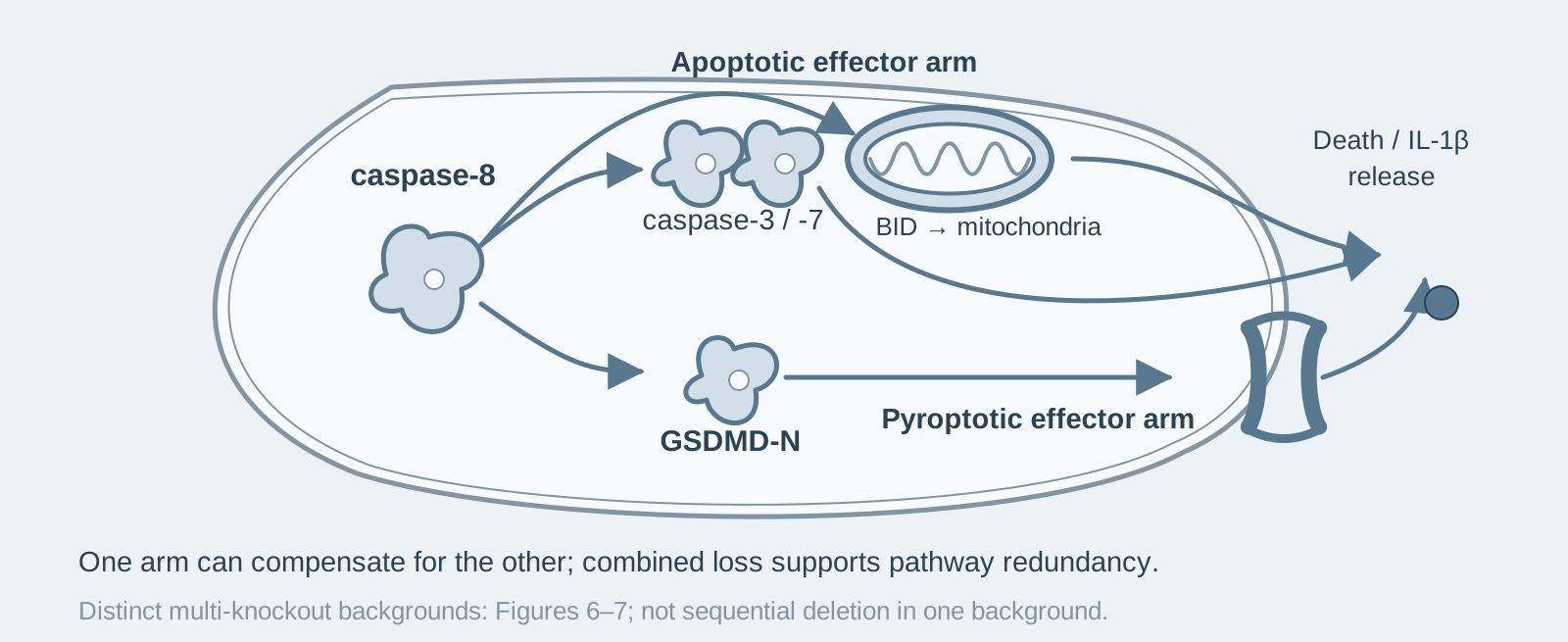
Key mechanism: In XIAP deficiency, the apoptotic effectors downstream of caspase-8 and GSDMD are redundant; only their combined deletion blocks cell death and IL-1β release;
- 03
Significance: NLRP3 assembly downstream of caspase-8 requires neither GSDMD pores nor pannexin-1, uncoupling the mechanisms by which intrinsic and extrinsic apoptosis activate NLRP3.
On this page
I. What question does this paper answer?
Deficiency of XIAP (X-linked inhibitor of apoptosis protein) predisposes humans to X-linked hemophagocytic lymphohistiocytosis and inflammatory bowel disease. Excessive caspase-8 activation is known to be central, but the molecules that execute cell death and IL-1β release downstream have remained unclear. The paper concludes that caspase-8 engages both the apoptotic effector caspases (-3 and -7) and the pyroptotic effector GSDMD. These two routes are redundant: deleting either side alone cannot prevent the response, whereas combined deletion can. Assembly of the NLRP3 inflammasome requires neither GSDMD pores nor pannexin-1.
II. How the evidence builds the argument
First step: Patient samples confirm the caspase-8–GSDMD–IL-1β axis (Figure 1). The authors identified two patients with XIAP-deficient inflammatory bowel disease (a 9-year-old with Crohn's disease and a 1-year-old with very early-onset IBD, both lacking XIAP protein expression). After LPS stimulation, the patients' PBMCs showed increased IL-1β release and mature p17, accompanied by enhanced caspase-8 processing and cleavage of GSDMD into p30. Staining for activated caspase-8 and GSDMD in diseased intestinal mucosa exceeded that in healthy controls and decreased after enteral nutrition or anti-TNF treatment plus immunosuppression. These results indicate that excessive activation of the caspase-8–GSDMD–IL-1β axis is indeed present in diseased tissues from humans with XIAP deficiency.
Second step: Caspase-8 directly processes GSDMD, but GSDMD is dispensable for cell death (Figures 2–3). The authors primed mouse bone marrow-derived macrophages (BMDMs) with LPS and then added Smac mimetics (IAP antagonists) to model XIAP deficiency. Only compounds that inhibited both XIAP and cIAP1/2 (4 compounds, including Cp.A) caused cell death, caspase-8 processing and IL-1β activation; compounds that inhibited only cIAPs (3 compounds, including birinapant) did not. Cp.A-induced GSDMD p30 remained detectable in Nlrp3-knockout and caspase-1-knockout cells, unlike the complete dependence on NLRP3–caspase-1 seen with nigericin. However, neither Gsdmd single knockout nor Gsdmd/Gsdme double knockout affected cell death induced by Cp.A or a TAK1 inhibitor, even with the NLRP3 inhibitor MCC950 added, and IL-1β release was not reduced either. These results indicate that caspase-8 can directly process GSDMD without the inflammasome, but GSDMD is dispensable for both cell death and IL-1β release in XIAP deficiency.
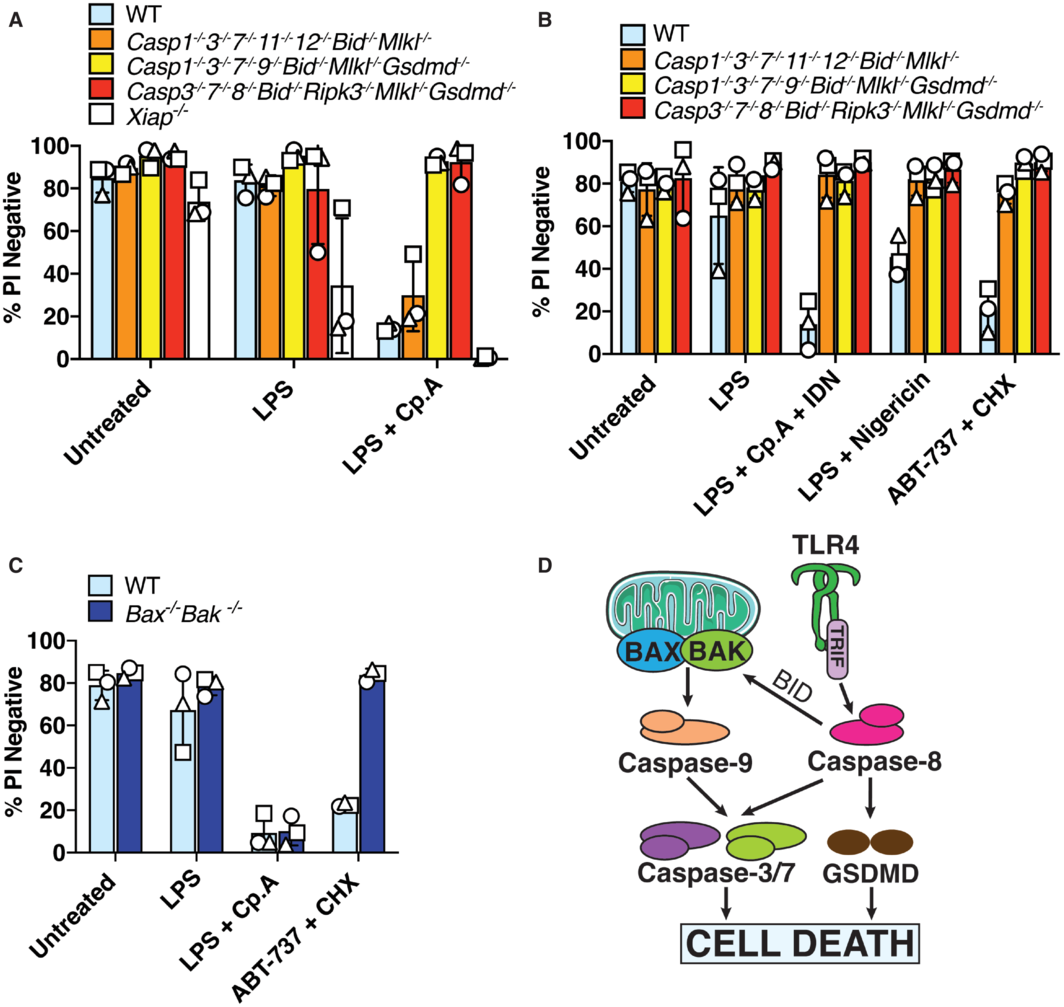
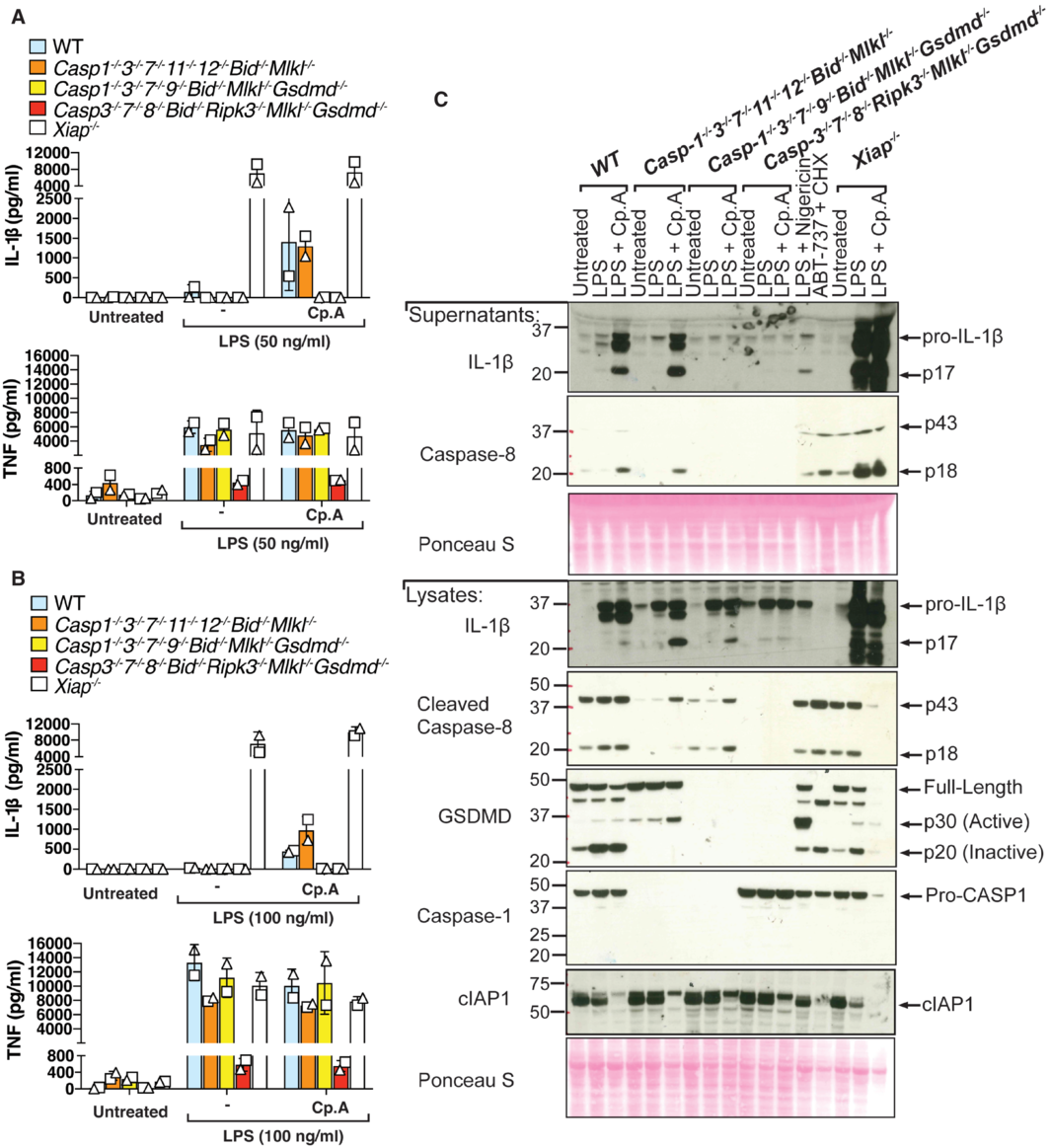
Third step: Combined knockouts reveal redundancy between apoptotic and pyroptotic machinery (Figures 6–7). The authors generated a series of immortalized BMDMs with CRISPR-mediated deletion of multiple genes. Cells lacking caspase-1, -3, -7, -11 and -12, BID and MLKL still died in response to LPS plus Cp.A. Controls showed resistance to necroptosis, nigericin-induced pyroptosis and ABT-737-induced intrinsic apoptosis, confirming that the deletions were effective. Complete protection was achieved only when Gsdmd was additionally deleted in this background, or when caspase-8 was absent. Expression of caspase-8 in 293T cells cleaved GSDMD into the pore-forming p30 fragment, with an effect comparable to caspase-1. IL-1β release followed the same logic: release of p17 was blocked only by combined loss of the apoptotic machinery and GSDMD, or by loss of caspase-8. These results indicate that the apoptotic effector caspases and GSDMD downstream of caspase-8 redundantly execute cell death and IL-1β release.
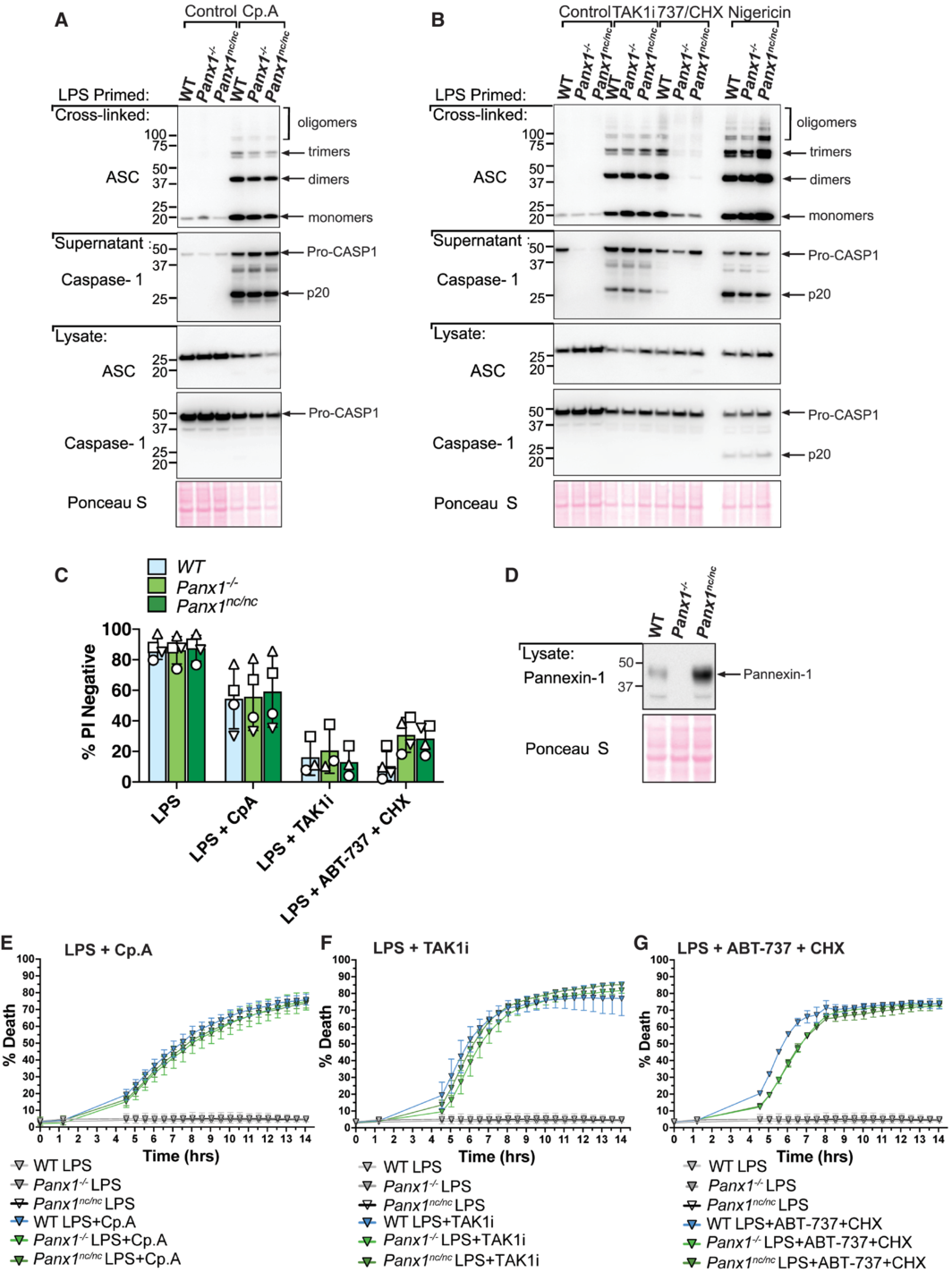
Fourth step: NLRP3 assembly is independent of GSDMD and pannexin-1 (Figures 4–5). ASC crosslinking assays showed that Gsdmd loss did not affect ASC oligomerization induced by Cp.A or a TAK1 inhibitor. The authors then generated pannexin-1-knockout mice and mice carrying knock-in mutations at the caspase-3/-7 cleavage sites (D375A/D378A). Neither alteration affected ASC oligomerization, production of caspase-1 p20 or cell death downstream of Cp.A or a TAK1 inhibitor. By contrast, NLRP3 activation following BAX/BAK-dependent mitochondrial apoptosis induced by ABT-737/CHX depended on pannexin-1. These results indicate that NLRP3 assembly downstream of extrinsic apoptosis (caspase-8) requires neither GSDMD pores nor pannexin-1, whereas intrinsic apoptosis (BAX/BAK) requires pannexin-1: the two pathways activate NLRP3 through different mechanisms.
III. Implications for experiments
- Single knockouts can misidentify the executor in redundant pathways: In the XIAP/cIAP-deficiency model, neither Gsdmd single knockout nor caspase-3/7 double knockout prevents cell death; only combined knockouts can identify the executors. Conversely, the requirement for GSDMD becomes apparent only in the multiple-knockout background lacking apoptotic machinery.
- Distinguish the readouts of NLRP3 "activation": ASC oligomerization (assembly), production of caspase-1 p20 and IL-1β release are three different events. GSDMD loss reduces only the release of p20 and IL-1β, without affecting assembly; supernatant IL-1β cannot be used to infer whether the inflammasome has assembled.
- The mechanisms by which intrinsic and extrinsic apoptosis activate NLRP3 cannot be treated as interchangeable: Pannexin-1 is required only downstream of BAX/BAK. Applying conclusions from mitochondrial apoptosis to the caspase-8 pathway leads to the opposite conclusion.
IV. Connections to other papers on this site
- Comparison | Apoptosis activates NLRP3 through pannexin-1 (Chen 2019, EMBO J): Both papers demonstrate caspase-8 cleavage of GSDMD in the same IAP-inhibition model, but reach opposite conclusions about whether NLRP3 activation downstream of extrinsic apoptosis requires pannexin-1 (required in Chen, dispensable in this paper). The channel through which apoptosis activates NLRP3 therefore remains to be reconciled.
- Extension | Incomplete GSDME-mediated pyroptosis permits IL-1α release (Aizawa 2020, iScience): This illustrates alternative executors for caspase-8. In Aizawa, caspase-8 switches to cleaving GSDME when caspase-1 is absent; in this paper, caspase-8 cleaves GSDMD in XIAP deficiency, while redundant apoptotic machinery operates in parallel.
- Extension | Effector caspases amplify apoptotic signaling through feedback (McComb 2019, Sci Adv): McComb demonstrated that caspase-3/-7 are fully redundant in executing apoptosis. This paper shows that redundancy extends beyond the effector caspases themselves: the apoptotic and pyroptotic machinery back each other up, and only combined deletion blocks cell death.
(The cross-paper comparisons above are an integrated interpretation, not a direct conclusion of any single original paper.)
What remains unresolved
Limitations: ① Caspase-8 cleaves GSDMD less efficiently than caspase-1, and the physiological contribution of this redundant axis in vivo remains uncertain. ② The TAK1-inhibitor and Cp.A models differ in the dependence of IL-1β release on GSDMD (release is reduced in the former but not the latter), for reasons that remain unclear.
Caspase-8-driven apoptotic and pyroptotic crosstalk causes cell death and IL-1β release in X-linked inhibitor of apoptosis (XIAP) deficiency
Sebastian A Hughes; Meng Lin; Ashley Weir; Bing Huang; Liya Xiong; Ngee Kiat Chua; Jiyi Pang; Jascinta P Santavanond; Rochelle Tixeira; Marcel Doerflinger; Yexuan Deng; Chien‐Hsiung Yu; Natasha Silke; Stephanie A Conos; Daniel Frank; Daniel S Simpson; James M Murphy; Kate E Lawlor; Jaclyn S Pearson; John Silke; Marc Pellegrini; Marco J Herold; Ivan K H Poon; Seth L Masters; Mingsong Li; Qin Tang; Yuxia Zhang; Maryam Rashidi; Lanlan Geng; James E Vince The EMBO Journal. 2023;42:.
Figures are from the verified original paper stored in the library. Original labels, axes and controls are retained; figure numbers and sources are registered in the library.
References
- Hughes SA, Lin M, Weir A, et al. Caspase-8-driven apoptotic and pyroptotic crosstalk causes cell death and IL-1β release in X-linked inhibitor of apoptosis (XIAP) deficiency. EMBO J. 2023;42(5):e110468. doi:10.15252/embj.2021110468
- Chen KW, Demarco B, Heilig R, et al. Extrinsic and intrinsic apoptosis activate pannexin-1 to drive NLRP3 inflammasome assembly. EMBO J. 2019;38(10):e101638. doi:10.15252/embj.2018101638
- Lawlor KE, Khan N, Mildenhall A, et al. RIPK3 promotes cell death and NLRP3 inflammasome activation in the absence of MLKL. Nat Commun. 2015;6:6282. doi:10.1038/ncomms7282
Paper discussion
No sign-up. Nickname optional.