- 01
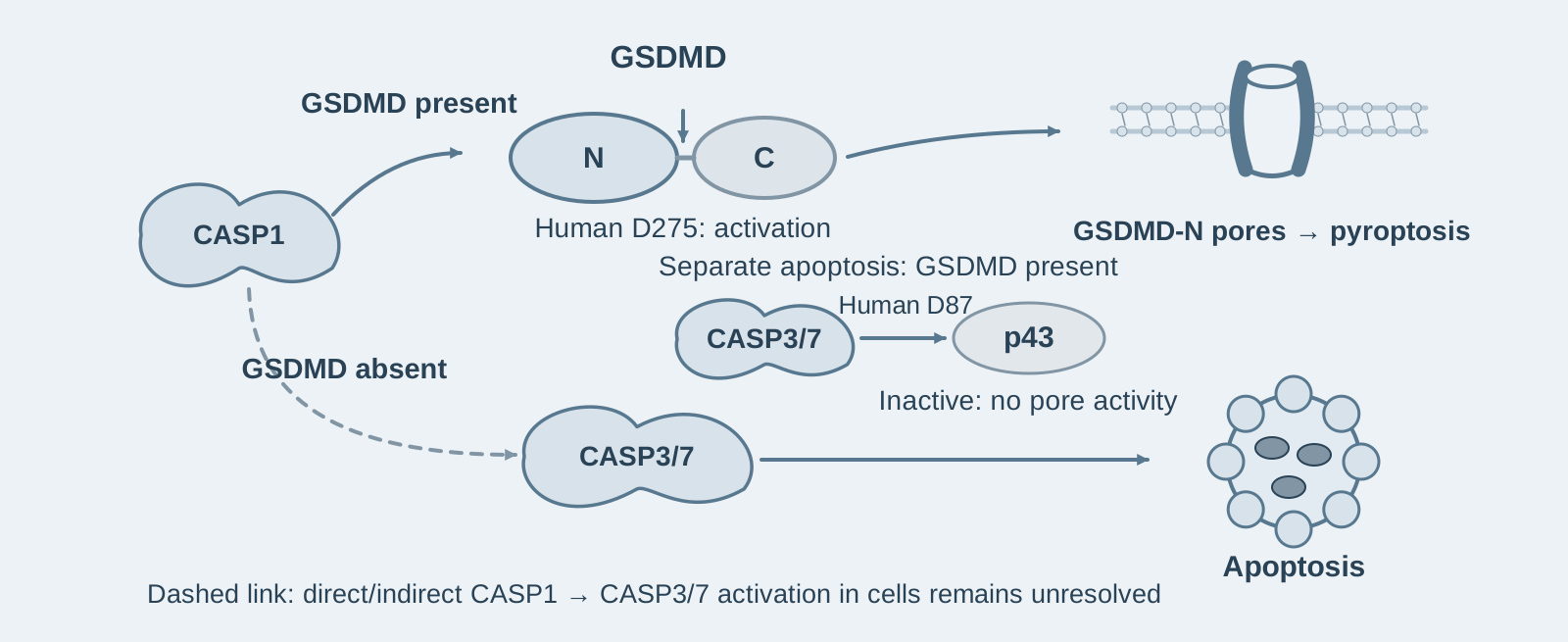
Main finding: In the absence of GSDMD, caspase-1 activates apoptosis in monocytes/macrophages; during apoptosis, caspase-3/7 cleave GSDMD at D87 to inactivate it;
- 02
Key mechanism: GSDMD is the only pyroptotic substrate of caspase-1; the D87 cleavage site differs from the inflammatory caspase cleavage site at D275, and its products lack pore-forming activity;
- 03
Significance: Cell death pathways do not run on parallel tracks—pyroptosis is actively shut down during apoptosis, while caspase-1 signaling switches to apoptosis when GSDMD is absent.
On this page
I. What question does this paper answer?
Inflammatory caspase-1 cleaves GSDMD to trigger pyroptosis, whereas apoptotic caspase-3/7 execute apoptosis. Are the two pathways independent? This paper addressed the question using Val-boroPro (VbP, a DPP8/9 inhibitor that specifically activates caspase-1 without the additional signals associated with microbial stimuli) as a probe: crosstalk is bidirectional—without GSDMD, caspase-1 activates caspase-3/7 and induces apoptosis; during apoptosis, caspase-3/7 cleave GSDMD at D87, eliminating its pyroptotic activity. Monocytes and macrophages can therefore switch between the two forms of death according to substrate availability.
II. Following the logic of the evidence
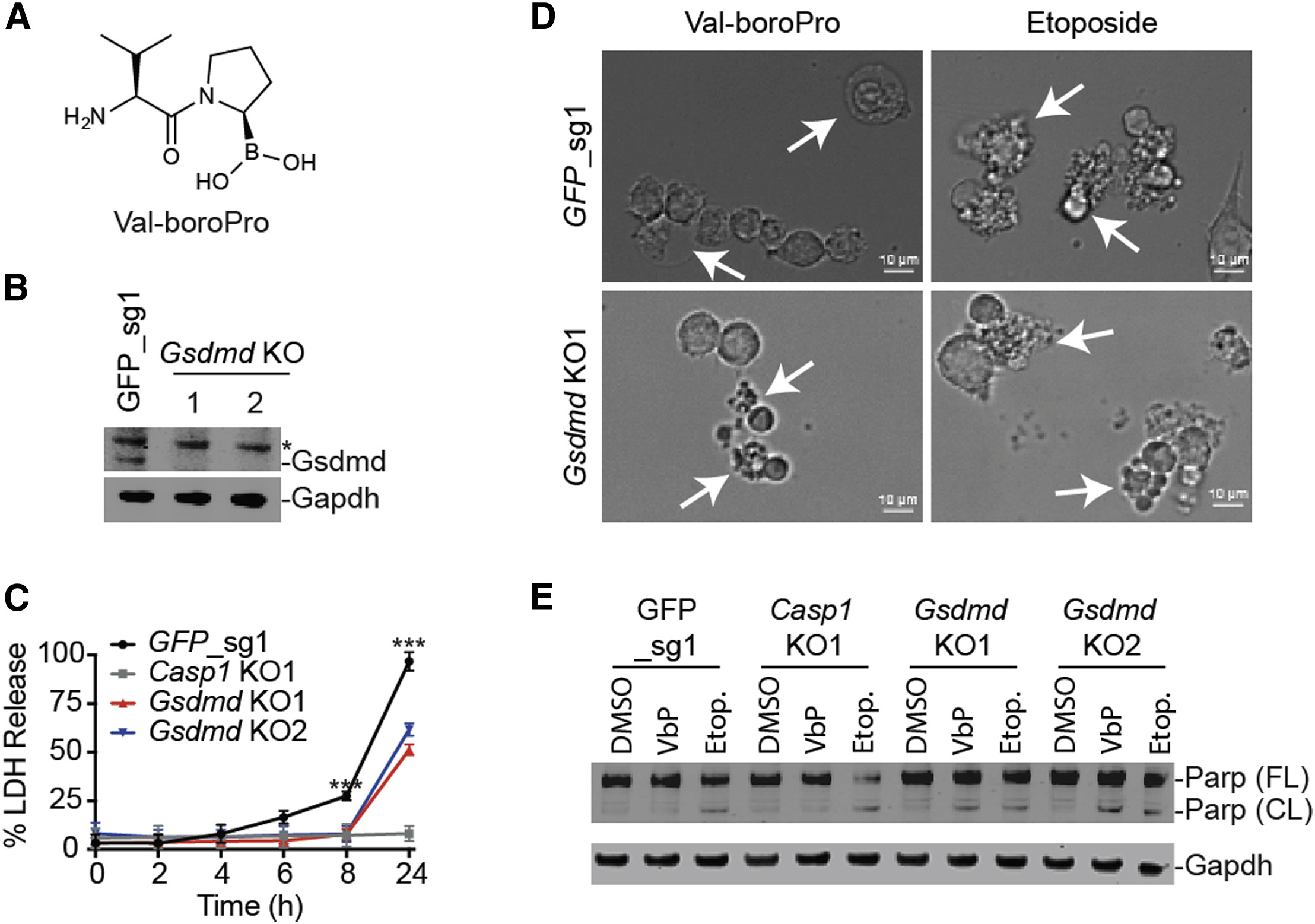
Step 1: Caspase-1 signaling switches to apoptosis when GSDMD is absent (Figures 1–2). The authors treated GSDMD-knockout RAW264.7 and THP-1 macrophages/monocytes with VbP and found that the cells no longer underwent pyroptosis. Instead, they displayed apoptotic morphology such as membrane blebbing, together with cleavage of the apoptotic substrate PARP and delayed cell death; these events did not occur in caspase-1-knockout cells. Together, these results show that in the absence of GSDMD, caspase-1 activates caspase-3/7 to induce apoptosis—GSDMD is the only pyroptosis-executing substrate of caspase-1.
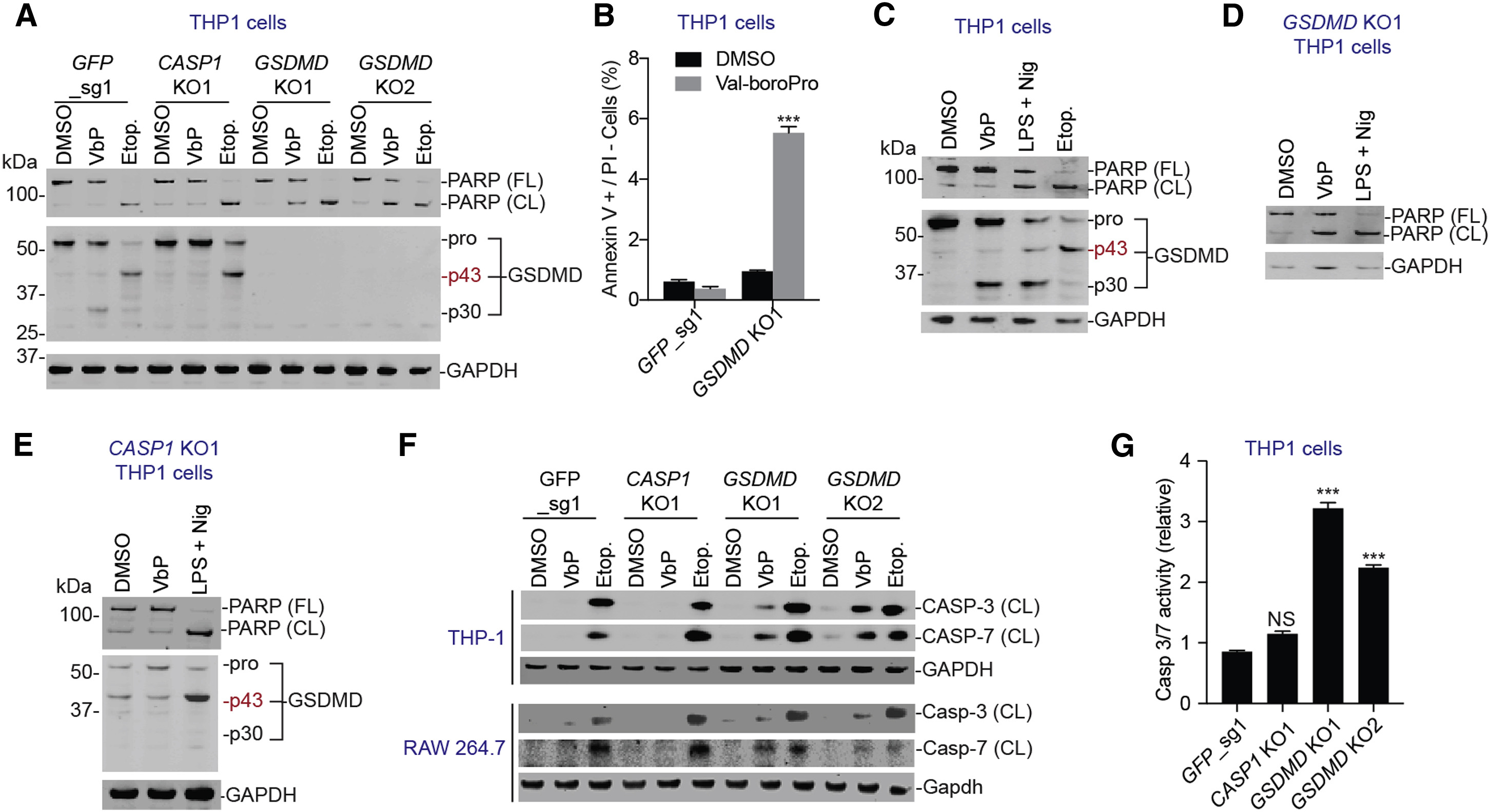
Step 2: GSDMD is cleaved to a p43 fragment during apoptosis (Figures 2–3). The authors treated THP-1 cells with four apoptosis inducers that act through different mechanisms—etoposide, bortezomib, cycloheximide, and staurosporine—and found an approximately 43 kDa GSDMD fragment (p43) in every case. The same fragment was also produced in caspase-1-knockout cells, showing that it was not a caspase-1 product; the cleavage site was upstream of the inflammatory caspase cleavage site at D275. Together, these results show that p43 is a specific product of GSDMD cleavage by apoptotic caspases and can serve as a band for distinguishing the mode of death.
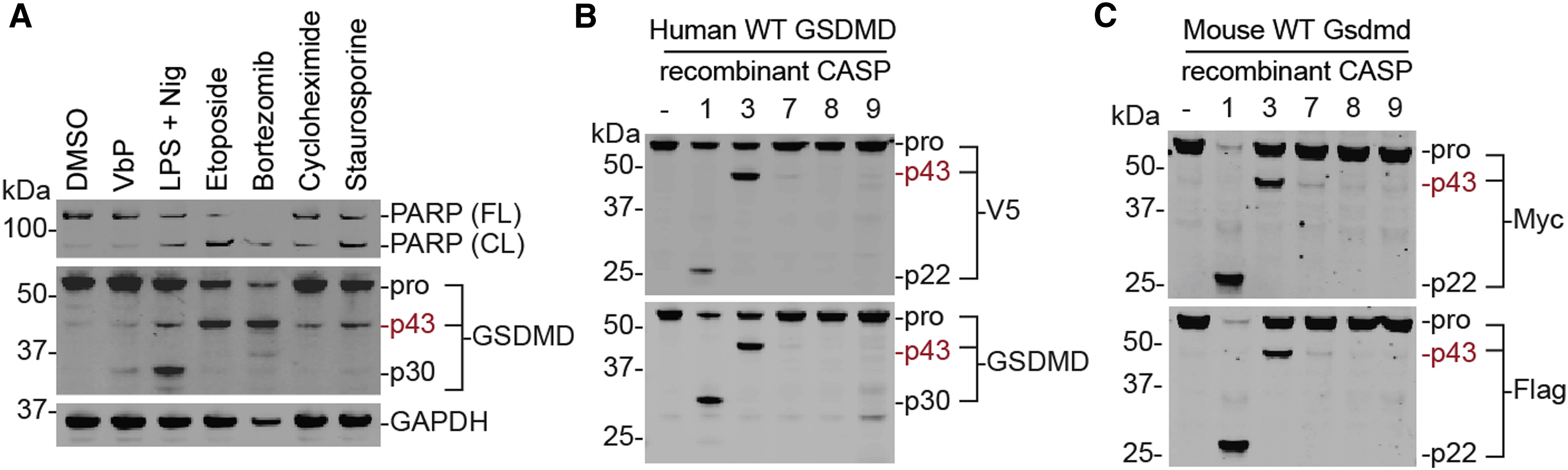
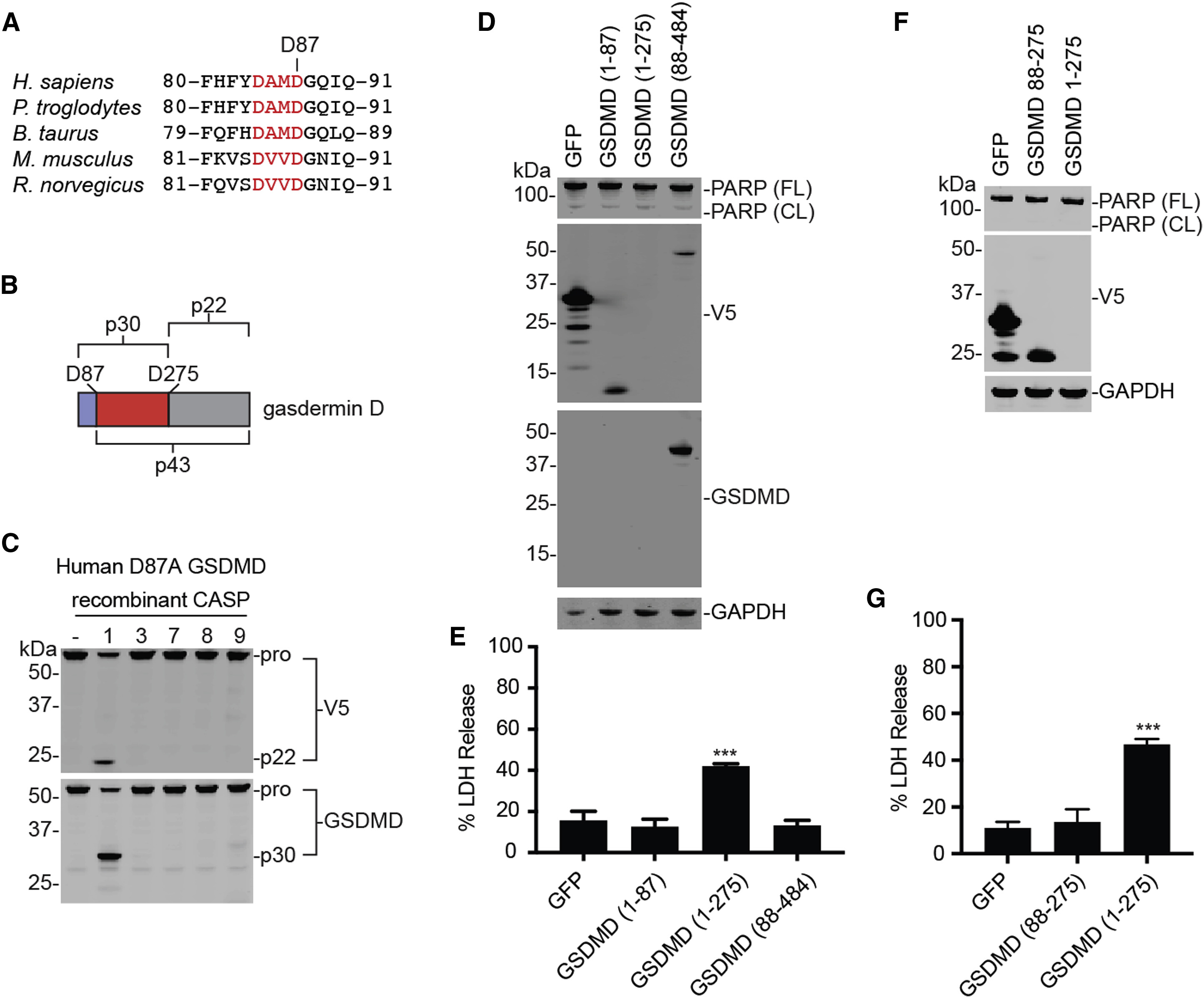
Step 3: D87 is the inactivating cleavage site (Figure 4). In the GSDMD sequence, the authors identified an evolutionarily conserved apoptotic caspase recognition motif (DXXD) upstream of D275: human D87 (mouse D88). The D87A mutant confirmed that caspase-1 could still cleave at D275 to produce p30, whereas caspase-3/7 no longer produced p43. Functionally, overexpression of the fragments produced by D87 cleavage (1–87, 88–484, and 88–275, which mimics subsequent caspase-1 cleavage of p43) showed no cytotoxicity. Together, these results show that apoptotic caspases cleave GSDMD at D87 to inactivate it, actively blocking pyroptosis during apoptosis.
III. Implications for experiments
- The p43 band is a readout of "cells undergoing apoptosis": On a GSDMD Western blot, the 30 kDa fragment (p30) points to pyroptosis, while the 43 kDa fragment (p43) points to inactivating cleavage by apoptotic caspases—the origins of the two bands need to be distinguished.
- VbP plus GSDMD knockout is a tool combination for studying non-pyroptotic functions of caspase-1: It directs caspase-1 activity into apoptosis and can be used to separate "pyroptosis-dependent" from "pyroptosis-independent" caspase-1 substrates.
- Pyroptosis will be underestimated in mixed death phenotypes: Once apoptosis begins, GSDMD is inactivated by D87 cleavage and pyroptotic readouts decline—this inhibitory direction should be considered when the two forms of death coexist.
IV. Connections to other papers on this site
- Comparison | Incomplete GSDME-mediated pyroptosis permits IL-1α release (Aizawa 2020, iScience): This paper demonstrates that without GSDMD, caspase-1 switches to caspase-3/7-mediated apoptosis; Aizawa demonstrates that without caspase-1, ASC–caspase-8 instead cleaves GSDME to induce pyroptosis—the two inflammasome "alternative routes" proceed in opposite directions.
- Extension | Apoptosis activates NLRP3 through pannexin-1 (Chen 2019, EMBO J): This paper found that apoptotic caspase-3/7 cleave GSDMD at D87 into inactive fragments; Chen used D88A knock-in mice to demonstrate that this inactivating cleavage is a physiological mechanism that limits pro-inflammatory lysis during apoptosis—an observed phenomenon was extended to in vivo evidence.
- Extension | The caspase-1 inflammasome activates a caspase-7 cascade (Lamkanfi 2008, Mol Cell Proteomics): Lamkanfi established a cascade in which caspase-1 directly cleaves and activates caspase-7; this paper demonstrates that when GSDMD is absent, caspase-1 activation of caspase-3/7 takes cells from pyroptosis into apoptosis—this cascade is the biochemical basis for the phenomenon described here.
(The comparisons across papers above are a synthesis, rather than a direct conclusion of any one original paper.)
What remains unresolved
Limitations: ① The direct mechanism by which caspase-1 activates caspase-3/7 (including whether it cleaves them directly) remains unclear. ② All experiments were performed in cell lines; the contribution of bidirectional crosstalk in vivo has not been tested.
Pyroptosis and apoptosis pathways engage in bidirectional crosstalk in monocytes and macrophages
Cornelius Y. Taabazuing; Marian C. Okondo; Daniel A. Bachovchin Cell Chemical Biology. 2017;24:507–514.e4.
The original PDF was supplied by the user, verified against its title, authors, DOI and complete figures, and stored without modification. The verified original figures retain their labels, axes and controls. The blue-gray cover is an independently drawn mechanism schematic with separate source records.
References
- Taabazuing CY, Okondo MC, Bachovchin DA. Pyroptosis and apoptosis pathways engage in bidirectional crosstalk in monocytes and macrophages. Cell Chem Biol. 2017;24(4):507-514.e4. doi:10.1016/j.chembiol.2017.03.009
- Okondo MC, Johnson DC, Sridharan R, et al. DPP8 and DPP9 inhibition induces pro-caspase-1-dependent monocyte and macrophage pyroptosis. Nat Chem Biol. 2017;13(1):46-53. doi:10.1038/nchembio.2229
- Kayagaki N, Stowe IB, Lee BL, et al. Caspase-11 cleaves gasdermin D for non-canonical inflammasome signalling. Nature. 2015;526(7575):666-671. doi:10.1038/nature15541
Paper discussion
No sign-up. Nickname optional.